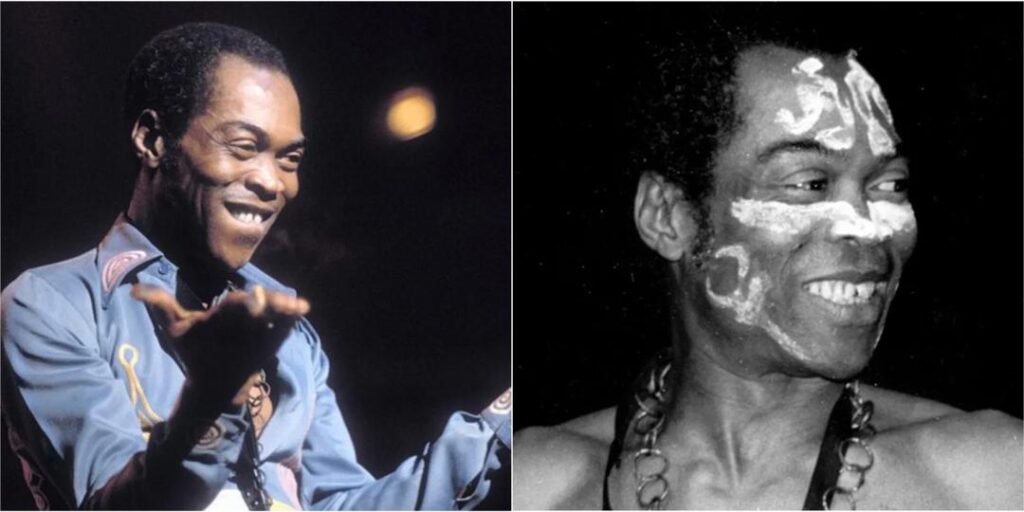
Femi Kuti talks on Fela’s Grammy award, legacy, influence, and similarities to Wizkid.
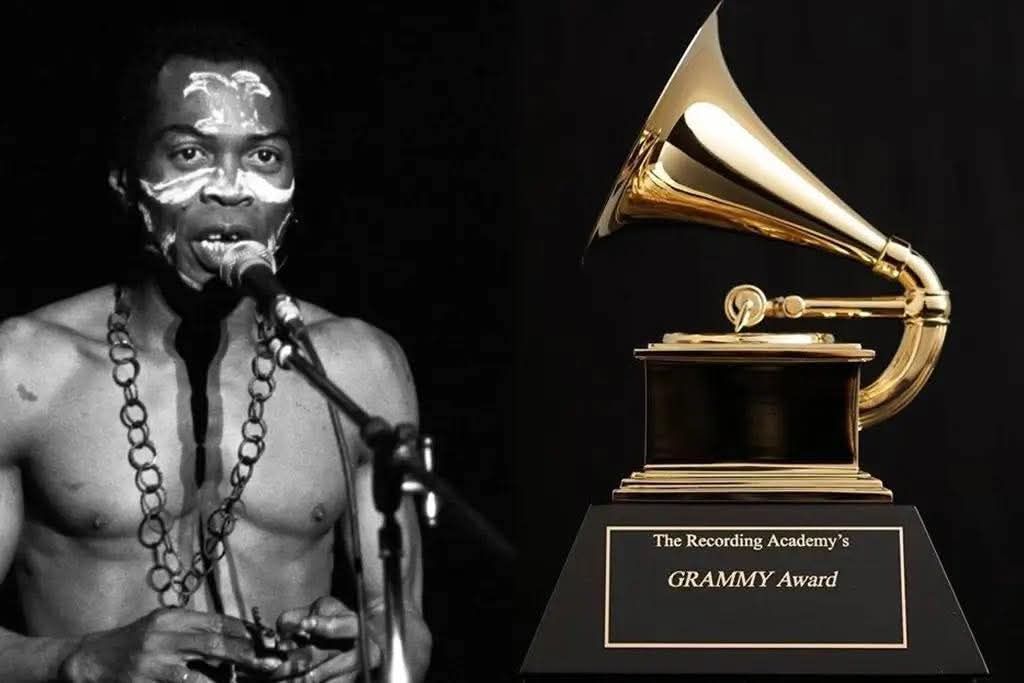
Femi Kuti, an Afrobeat exponent, has reminisced on his father, Afrobeat pioneer Fela Anikulapo Kuti, who received the Grammy Lifetime Achievement Award posthumously, describing the honor as a recompense for an artist who lived and worked purely by his own standards.
Speaking with ARISE News in Los Angeles, Femi discussed the Recording Academy’s choice to honor Fela more than three decades after his death, emphasizing what the event means to the Kuti family and how his father’s impact continues to define worldwide music and African cultural identity.
At the presentation, the Recording Academy announced: “It is our honor to present Fela Kuti with a lifetime achievement award from the Recording Academy. His children accept on his behalf. Femi, Yeni, and Kunle Kuti.”
When the Academy called the family, Femi was surprised to get the news. “I was surprised when they called to inform us that he would receive it, and we were shocked.” I was like, “Wow.” Then it was fantastic, a good sensation; I’d always knew my father was a genius, whom I admired and adored.”
He said that Fela’s music stood with the greatest composers of his time, even though he never embraced mainstream society. “Growing up his music was always special, we love reggae, we love, funk, jazz, but coming back to listen to him, I felt he was on the same level as any great composer or artist at that time.”
According to Femi, while worldwide stars dominated popular culture, Fela took an alternative approach. “He had a huge influence on mainstream musicians. He’s just never been mainstream. I would say he did not participate. He was most likely more focused on his musical goals.”
He stated that the Grammy accolade validates his independent character. “So, it was fantastic news that, wow, a man that stood by his own rules is rewarded.”
Femi further emphasized the significance of Fela becoming the first African laureate of the award. “Many Africans have done well in the music industry. So for him to be the first African singer to receive an award is a huge achievement for us and them.”
He advised that the Academy consider Fela’s far-reaching impact before making a judgment. “They must have sat down and said, ‘He deserves it. He deserves it.'” Beyoncé admires Jay Z, and hip hop was impacted by him. There is seldom a great musician, past or contemporary, who has not heard or been influenced by his music.
Femi responded to critics by saying, “And if anybody is complaining, go and create your own award.”
Femi further stressed that the family did not push for the accolade.
Fela’s daughter, Yeni Kuti, hailed the event as momentous for the continent.
“I’m so happy that Fela who has always represented Africa, not just Nigeria, but Africa has received this award.”
She stated that the accolade should motivate young creatives. “It’s just a statement to African, young up and coming artists, do what’s going to go on after our lifetime that’s what we need to do so that our legacy continues.”
The award comes amid fresh public debate about Fela’s significance, sparked by a January disagreement between his son Seun Kuti and artist Wizkid, which rekindled discussions about how African music success should be evaluated beyond numbers and prizes.
Femi addressed the comparisons explicitly.
“Leave anyone who believes they are superior to Fela alone. Time will tell, but for me, Fela is the greatest.
Yeni echoed this view, encouraging respect for cultural pioneers. “Do not compare chalk to cheese. Fela is a legend; give him his flowers. Compare yourself to your peers; let our legends alone.”
For the Kuti family, the Grammy award is more than simply a celebration; it confirms Fela’s lasting significance as a musical, political, and cultural powerhouse whose impact goes far beyond entertainment.
It’s more than just a trophy; it’s a reminder that Fela’s music, politics, and resistance continue to resonate across generations, and that the world’s biggest music institutions are only now catching up to his legacy.