
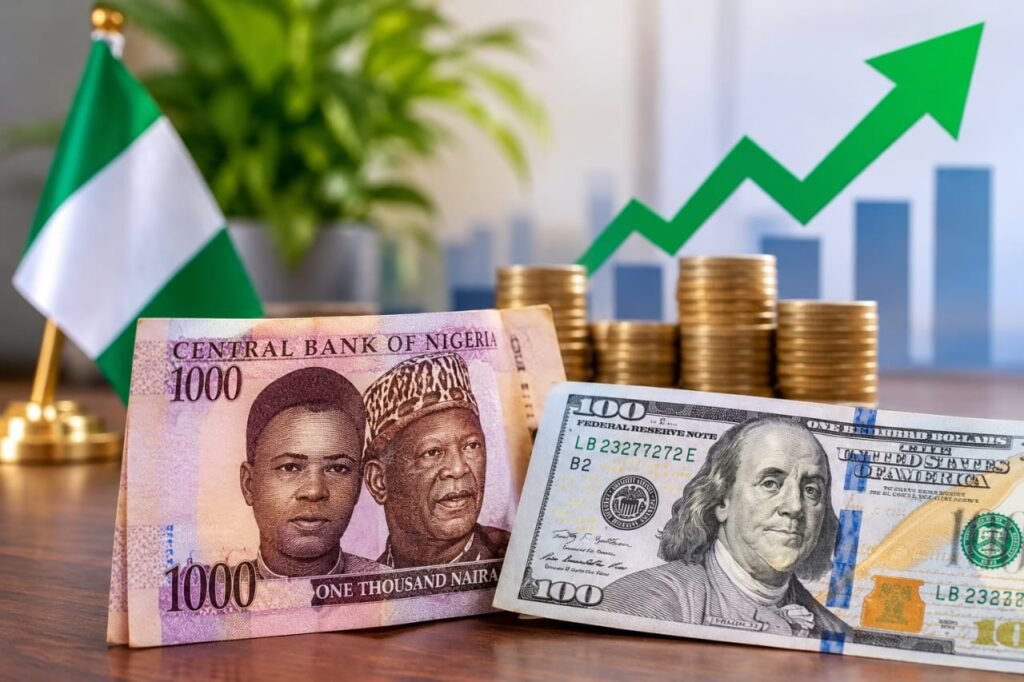
The naira recorded a 6.26 per cent appreciation against the United States dollar over the past year, indicating an improvement in the currency’s performance between November 2025 and November 2026.
On November 6, 2026, the naira exchanged at N1,346.79 per dollar, compared with N1,436.74 on the same date in 2025. This represents an appreciation of N89.95 against the dollar.
The development suggests that the local currency has regained some value over the 12-month period, a movement that could help reduce foreign exchange expenses for businesses and consumers that rely on imported goods and services.
The improvement comes against the backdrop of the Central Bank of Nigeria’s efforts to stabilise the foreign exchange market, enhance dollar supply and build confidence in the naira.
The stronger exchange rate could lower the cost of bringing in raw materials, machinery, pharmaceuticals and other foreign-priced products, potentially reducing financial pressure on businesses and consumers. However, the impact on market prices will depend on how promptly importers reflect the exchange rate changes in their pricing and whether the naira sustains its recent gains.
Businesses, particularly manufacturers with substantial foreign currency obligations, could also benefit from reduced naira costs when meeting dollar-denominated liabilities.
Speaking in July 2026, CBN Governor Olayemi Cardoso maintained that the naira should operate as a competitive, market-driven currency rather than receive artificial support. He made this position known in Abuja, stressing the apex bank’s commitment to maintaining an open and transparent foreign exchange market based on willing buyers and willing sellers.
He said, “Our view is one of continuing on the path that we have embarked on, and that is to ensure that we have a market that is transparent, that is liquid, and one that has willing buyer, willing seller.
“At the present level, the country does need a competitive currency. The naira’s value has to be determined by economic fundamentals, including stronger oil and non-oil exports, increased foreign direct investment, improved domestic productivity and lower import dependence.”
Cardoso further explained that the Central Bank was satisfied with the market’s performance, noting that it had become fully operational, accessible and transparent, with daily transaction turnover sometimes exceeding $1bn.
He added that the market was responding positively to the measures being implemented by the apex bank.
Meanwhile, Nigeria’s foreign exchange reserves reached $55.133bn as of November 5, 2026, offering a financial cushion for external obligations and measures aimed at maintaining exchange rate stability.
The reserves represent the country’s available foreign assets for supporting foreign exchange interventions and meeting international payment commitments.
Investors will continue to monitor the reserve position as an important indicator of Nigeria’s external liquidity, the stability of the naira and its ability to withstand pressures in the foreign exchange market.
NASTV AFRICA
Manifesting Africa’s Greatness