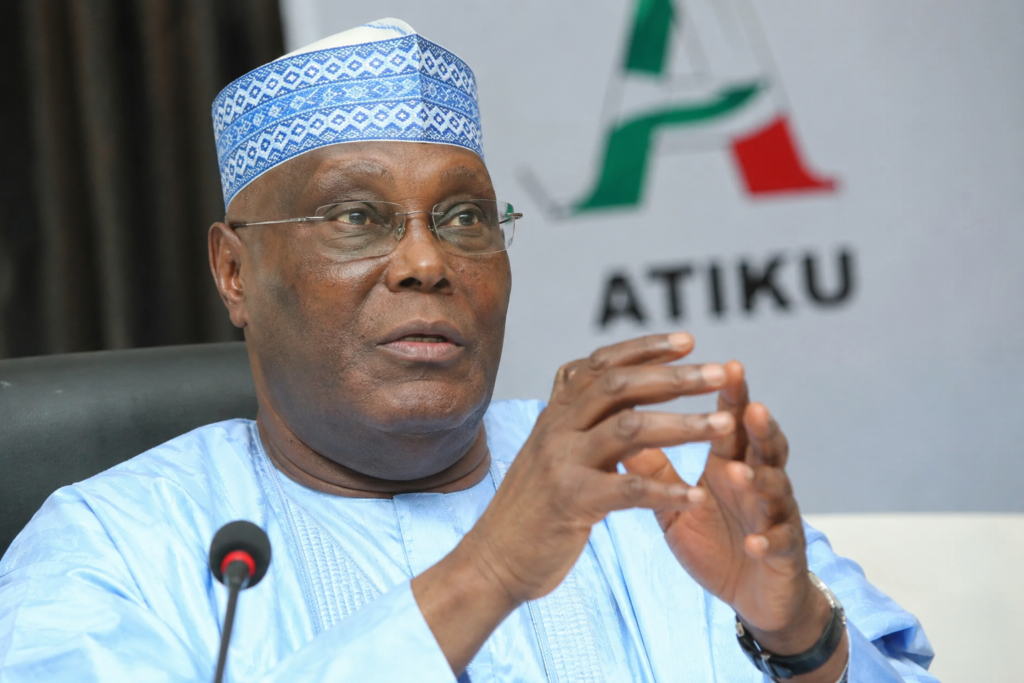
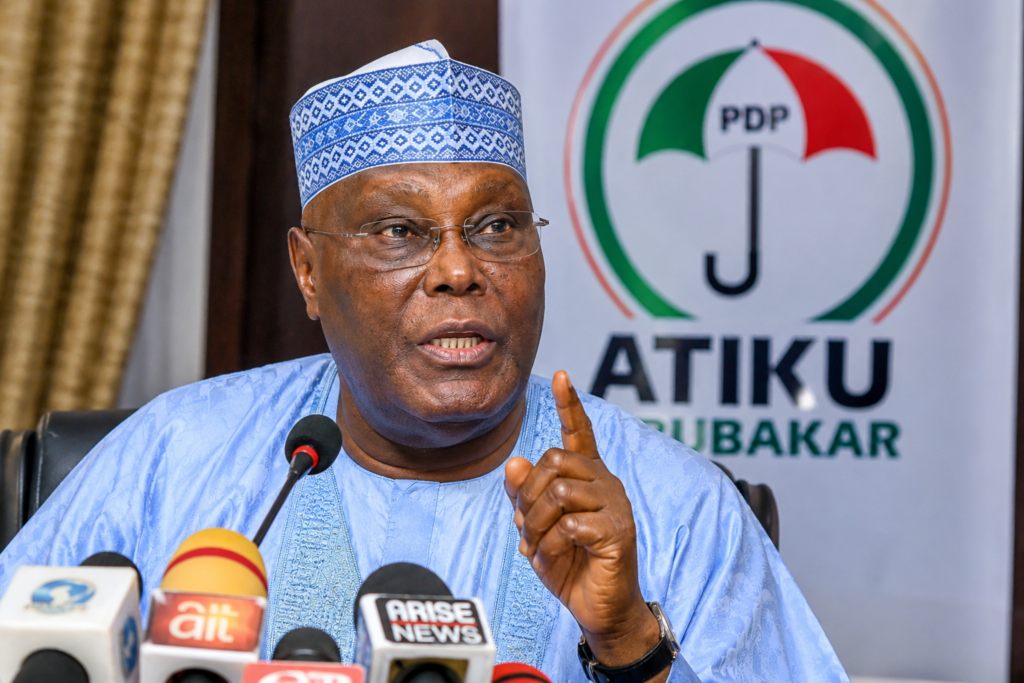
Former Vice President and African Democratic Congress (ADC) presidential candidate, Atiku Abubakar, has criticised the Federal Government’s claims that Nigeria’s economy is on the path to recovery, arguing that the country’s worsening living conditions and challenges facing the manufacturing sector contradict the administration’s position.
In a statement issued on Monday through his Senior Special Assistant on Public Communication, Phrank Shaibu, Atiku accused the Presidency of relying on macroeconomic indicators that, according to him, do not reflect the realities experienced by ordinary Nigerians.
The former vice president said the continued closure of manufacturing companies and the financial difficulties confronting many others were evidence that the economy remained under pressure despite government assurances of progress.
Quoting figures from the Manufacturers Association of Nigeria (MAN), Atiku claimed that 767 manufacturing firms had shut down, while 335 others were operating under severe financial distress. He also alleged that manufacturers were holding approximately ₦2.14 trillion worth of unsold finished goods, attributing the situation to weak consumer purchasing power.
He further stated that several multinational firms, including Procter & Gamble, GlaxoSmithKline, Sanofi and Kimberly-Clark, had either suspended local manufacturing operations or exited production in Nigeria. According to him, several indigenous manufacturers have also halted operations due to the harsh business environment.
Atiku also claimed that manufacturers spent an estimated ₦1.1 trillion on diesel to power their factories because of unreliable electricity supply and rising energy costs.
The former vice president maintained that while the Federal Government continues to highlight improvements in Gross Domestic Product (GDP), debt ratios and other macroeconomic indicators, many Nigerians are still battling high food prices, unemployment and declining purchasing power.
He questioned the government’s continued borrowing despite its claims that revenues have improved following the removal of fuel subsidy and reforms in tax administration. He also called on the Federal Government to explain how the gains from the subsidy removal have been utilised to improve infrastructure, healthcare, education and social welfare.
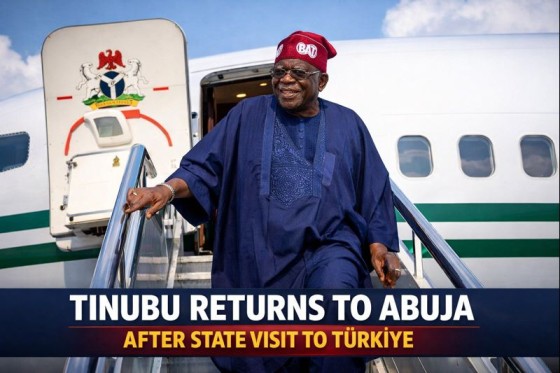
Atiku’s remarks came in response to a recent defence of President Bola Tinubu’s economic policies by the Presidency, which maintained that key reforms, including the removal of fuel subsidy and the liberalisation of the foreign exchange market, have stabilised the economy and laid the foundation for sustainable long-term growth.
The Federal Government has consistently defended its economic reforms, insisting they are necessary to reposition the economy despite the short-term hardships experienced by many Nigerians.
NASTV Africa
Manifesting Africa’s Greatness