

The Federal Government has reiterated its commitment to addressing food shortages and unemployment through the development of agriculture and livestock in the country.
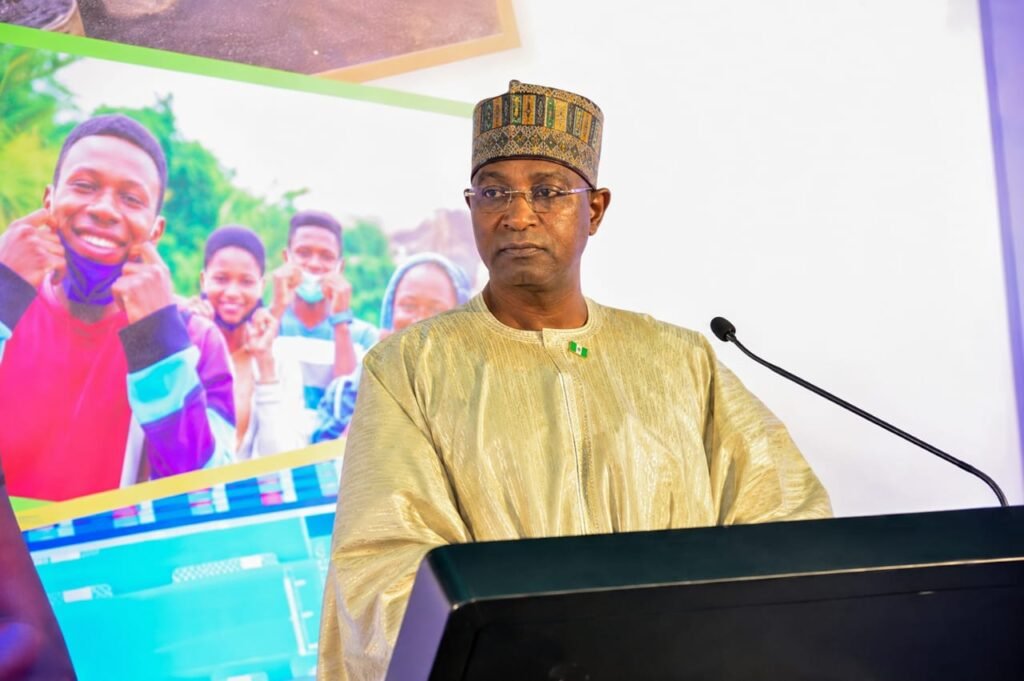
The Minister of Livestock Development, Idi Maiha, made this known on Monday at the second International Conference of the Agrifood Systems Stakeholders Forum held at the University of Port Harcourt.
The conference, organised by the Agricultural Policy Research Network, brought attention to food insecurity, poverty and youth unemployment and the need for practical solutions to the challenges.
Maiha, who was represented by the Director of Ruminant and Monogastric Development, Victor Egbon, commended APRNet for convening the conference and urged stakeholders to maintain cooperation in advancing the agricultural sector.
He also called on relevant stakeholders to support the Federal Government’s coordinated national livestock development agenda, saying it would contribute to higher agricultural productivity, employment generation and renewed public confidence in the sector.
The minister acknowledged the pressures affecting the country’s agrifood systems, including climate variability, flooding, drought, land degradation and increasing input costs.
He said the government was responding to some of these challenges by working to improve access to skills, finance, infrastructure and markets.
Maiha also listed animal diseases, post-harvest losses, weak connections between producers and markets, as well as limited access to finance, among the difficulties confronting the sector.
He, however, said the challenges could also be turned into opportunities to develop agrifood systems that are more productive, inclusive and resilient to climate-related pressures, while providing decent employment opportunities for women and young people.
According to the minister, the livestock value chain has considerable opportunities for investment in areas including feed production, hatcheries and dairy collection.
He further identified animal health services, storage, processing, logistics and waste-to-wealth businesses as areas with significant potential that have not been fully developed.
Speaking earlier, the Vice-Chancellor of the University of Port Harcourt, Prof. Princewill Chike, identified agriculture as an important avenue for tackling brain drain and youth migration.
Chike expressed concern over the continued migration of young people and its effect on the availability of skilled manpower and economic growth across Africa.
He urged policymakers to make agriculture more appealing to young Nigerians as part of efforts to address the “Japa” syndrome.
The vice-chancellor also commended President Bola Tinubu’s administration for its attention to agriculture and called for consistency and sustainability in agricultural policies.
The President and Conference Coordinator of APRNet, Prof. Anthony Onoja, appreciated the partners involved in organising the conference and called for greater cooperation among stakeholders in addressing food insecurity and youth unemployment.
Onoja, a lecturer in the Department of Agricultural Economics and Agribusiness Management at the University of Port Harcourt, said the conference was aimed at bringing academic research and policy solutions together to tackle hunger and poverty.
He said the meeting was expected to develop sustainable responses to low farm productivity, strengthen resilience to growing climate challenges and address conflict affecting the country.
The conference was supported by the Federal Government, the European Union and the International Fund for Agricultural Development, among other partners
NASTV AFRICA
Manifesting Africa’s Greatness